Managing Short-Term Credit Spreads: Technical Stops vs. Premium Stops
Successful credit-spread trading isn't just about collecting premium—it is about controlling risk when the trade doesn't work as expected.
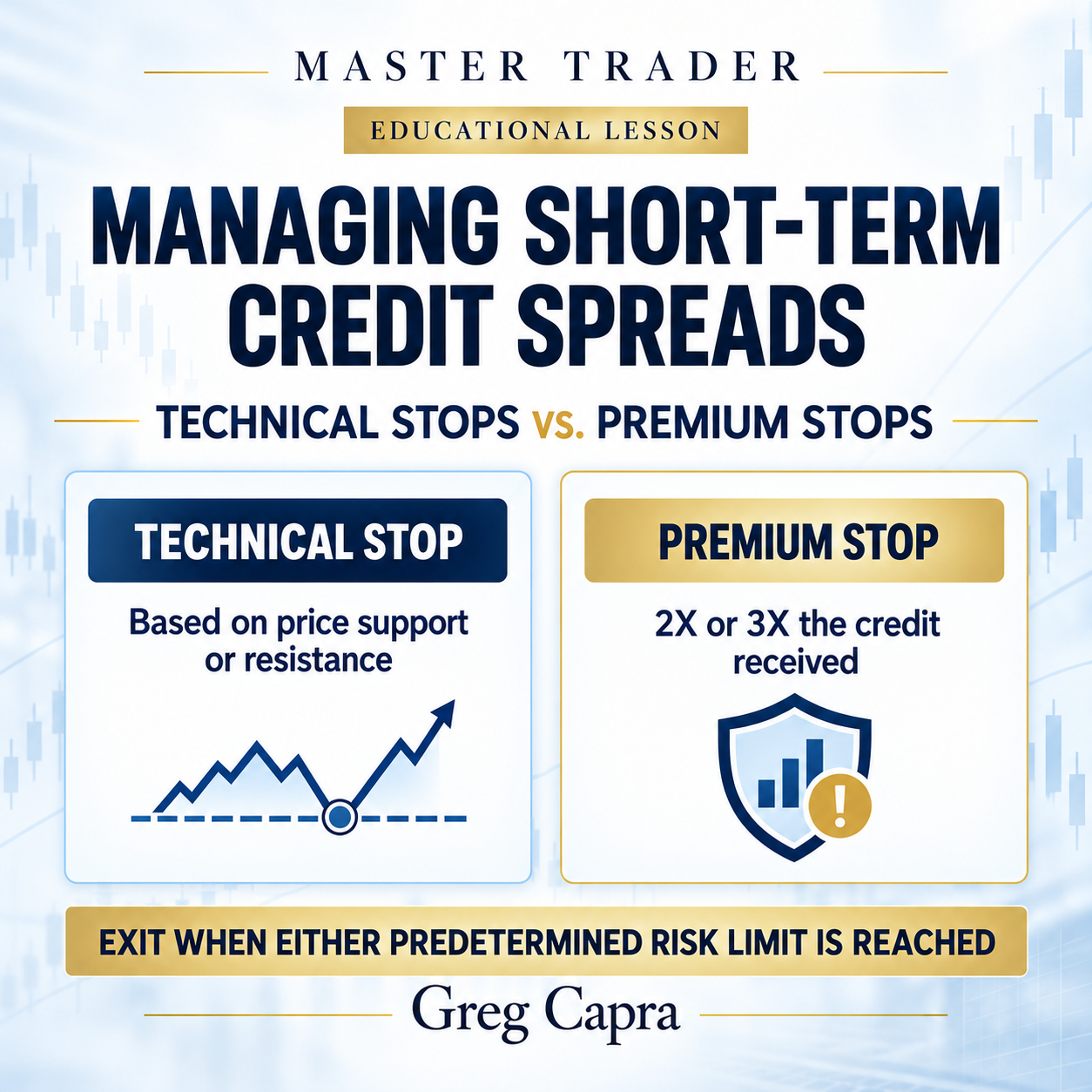
A technical stop is based on the underlying stock or ETF price and should be placed where the original trade setup is no longer valid. For a bull put spread, that is generally below meaningful price support. For a bear call spread, it is generally above meaningful resistance.
The advantage of a technical stop is that the position can remain open as long as the underlying price continues to respect the technical level that justified the trade.
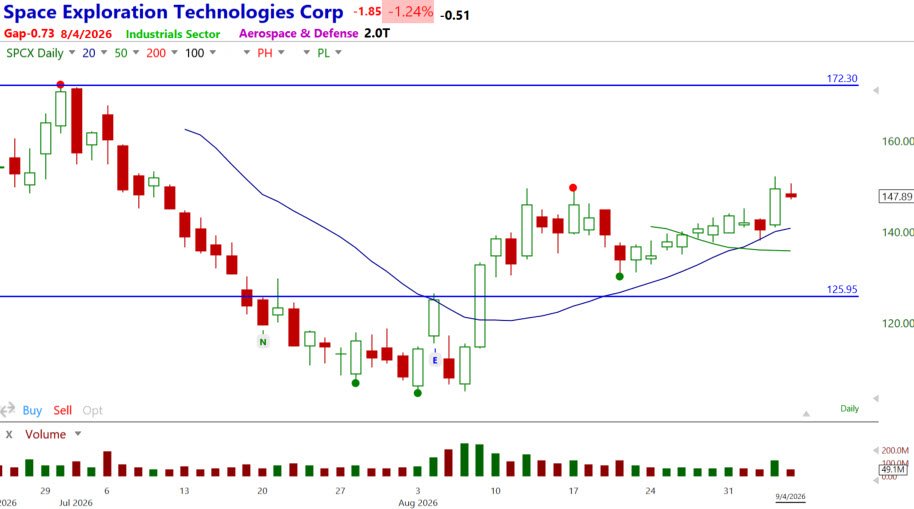
This chart pattern could be used in the Weekly Options Credit Spread Trader Letter. Once we find a pattern, we check Prem, Spread, Time to Expiration, and Earnings before recommendations.
A technical stop is based on the underlying stock or ETF price and should be placed where the original trade setup is no longer valid. For a bull put spread, that is generally below meaningful price support. For a bear call spread, it is generally above meaningful resistance.
The advantage of a technical stop is that the position can remain open as long as the underlying price continues to respect the technical level that justified the trade.
However,short-term option spreads can deteriorate quickly, especially as expiration approaches and the underlying moves closer to the short strike. Changes in volatility and widening bid/ask spreads can also increase the displayed cost of closing the position before the underlying reaches the technical stop.
For that reason, traders may also use a premium-based stop. A common guideline is to close the spread when the debit required to buy it back reaches two or three times the original credit.
For example, if a spread is opened for a $0.50 credit:
- A 2X premium stop closes the spread near a $1.00 debit, producing an approximate $0.50 loss.
- A 3X premium stop closes the spread near a $1.50 debit, producing an approximate $1.00 loss.
These examples exclude commissions, fees, and possible slippage.
A 2X stop controls the loss more tightly, but it may close the position during a temporary premium expansion even though technical support or resistance remains intact. A 3X stop gives the trade more room to work, but it also accepts a larger loss if the adverse move continues.
The two stops measure different things:
- The technical stop protects the logic of the trade.
- The premium stop protects the trading account.
Neither stop automatically takes priority. When both are part of the trade plan, generally close the position when either confirmed risk limit is reached.
Because option quotes can temporarily widen, avoid making an exit decision based solely on one distorted mark or midpoint. Confirm the underlying price, the current spread market, and the realistic debit required to close.
Use a limit order whenever practical, recognizing that fast markets and price gaps can still produce slippage.
Before entering any short-term credit spread, establish the technical stop, premium stop, and proper position size. Never increase the acceptable loss simply because the trade has moved against you.
Learn more about Master Trader education and research our comprehensive course bundles:
https://mastertrader.com/trading-education/
Learn the method. Follow the plan. Build the skills to trade with confidence.
Questions? Email Support@mastertrader.com
If you have found this post helpful, Share it Forward with other Traders. All the best Greg Capra