A Simple Checklist That Builds Discipline—and Consistency
One of the biggest challenges traders face isn’t finding setups—it’s executing them with discipline. Most losses don’t come from a lack of opportunity, but from impulsive decisions, chasing price, or trading without a structured plan.
This checklist is designed to solve that problem.
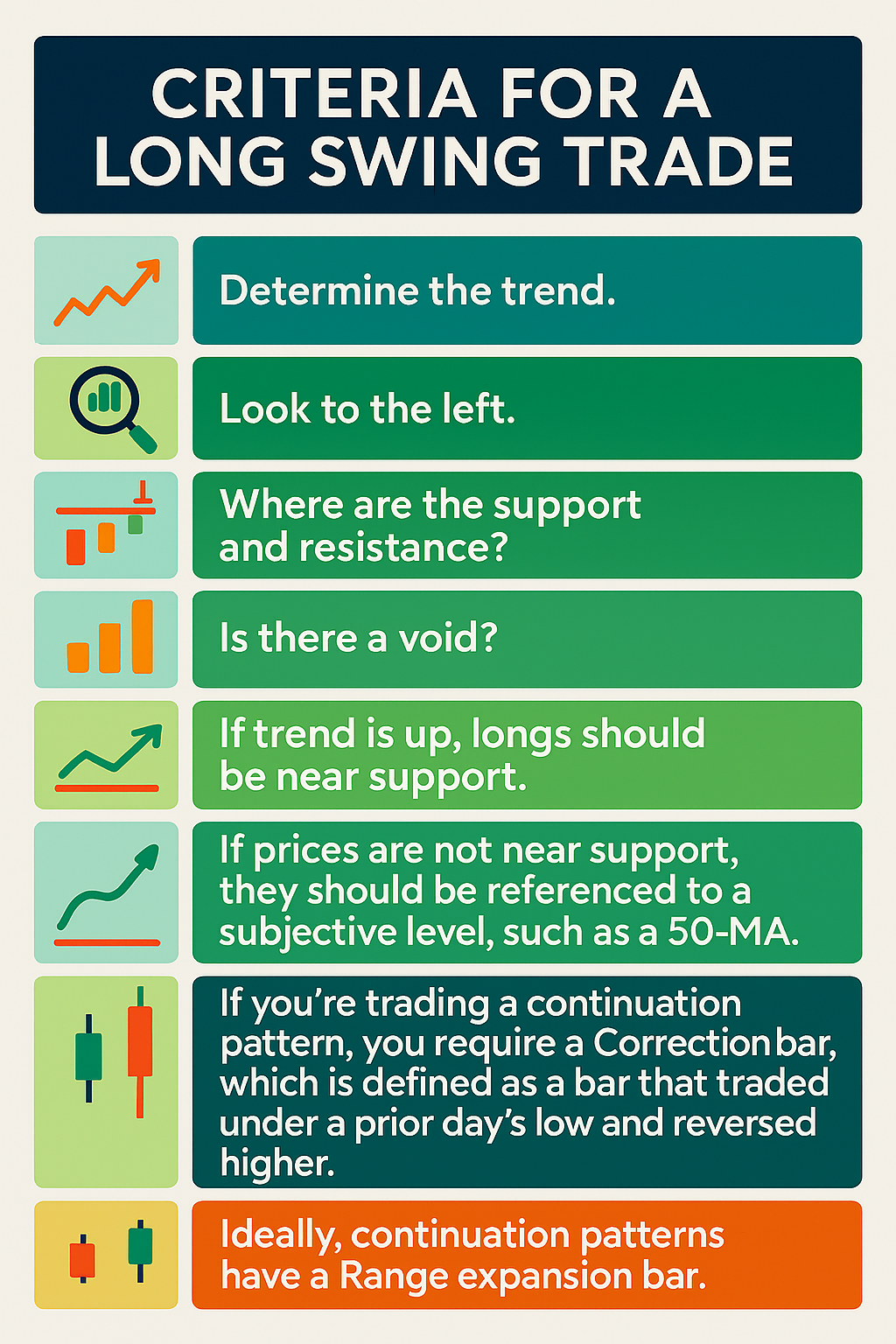
It provides a clear, objective framework for evaluating a long swing trade before capital is at risk. Each step forces you to slow down and answer the only questions that matter:
- What is the trend?
- Where is the price relative to support and resistance?
- Is there room for the trade to move (a void)?
- Are you entering at a logical location, or chasing?
By working through this process, you naturally eliminate low-quality setups—those with poor reward-to-risk, weak structure, or no institutional edge. Over time, this repetition conditions you to think in probabilities rather than emotion. What starts as a checklist becomes second nature.
How It’s Used
A trader reviews this list before entering every trade. If key criteria are missing—no nearby support, no clear trend, no void—the trade is skipped.
That alone dramatically improves consistency and capital preservation.
It also creates alignment:
- Trend + location + structure = higher probability
- Poor location + no structure = avoid
Simple, but powerful.
Choose a Master Trader Bundle that Works or You! Review them Here
For Those New to MTS
Each item on this checklist is not just a concept—it’s precisely defined within the Master Trader Technical Strategies methodology.
Inside the courses, every component is broken down into a systematic, repeatable process:
- How trends are objectively defined
- How to identify major support and resistance using pivots
- How to recognize price voids and their implications
- How to interpret bar-by-bar price action, including continuation and reversal signals
- How to align all of it into a structured trade plan with defined risk and targets
This isn’t theory—it’s a step-by-step framework to build actual trading strategies.
And while this checklist is shown here for swing trading, the exact same principles apply to day trading using intraday time frames.
The process doesn’t change—only the timeframe does.