One of the most overlooked—but powerful—market behaviors is contraction.
When traders think of opportunity, they often think of expansion: wide ranges, strong momentum, big bars. But expansion is usually the result, not the beginning. The beginning is almost always compression.
A coiling market is defined by:
- Narrowing price ranges
- Reduced distance between swing highs and swing lows
- Declining volatility
- Indecision that lasts just long enough to frustrate both bulls and bears
This is not random behavior. It reflects a temporary balance between supply and demand.
From a candlestick perspective, coiling markets often show:
- Overlapping bars
- Smaller real bodies
- Alternating candle colors
- Failed follow-through in both directions
To inexperienced traders, this looks messy and untradeable. To trained traders, it’s information.
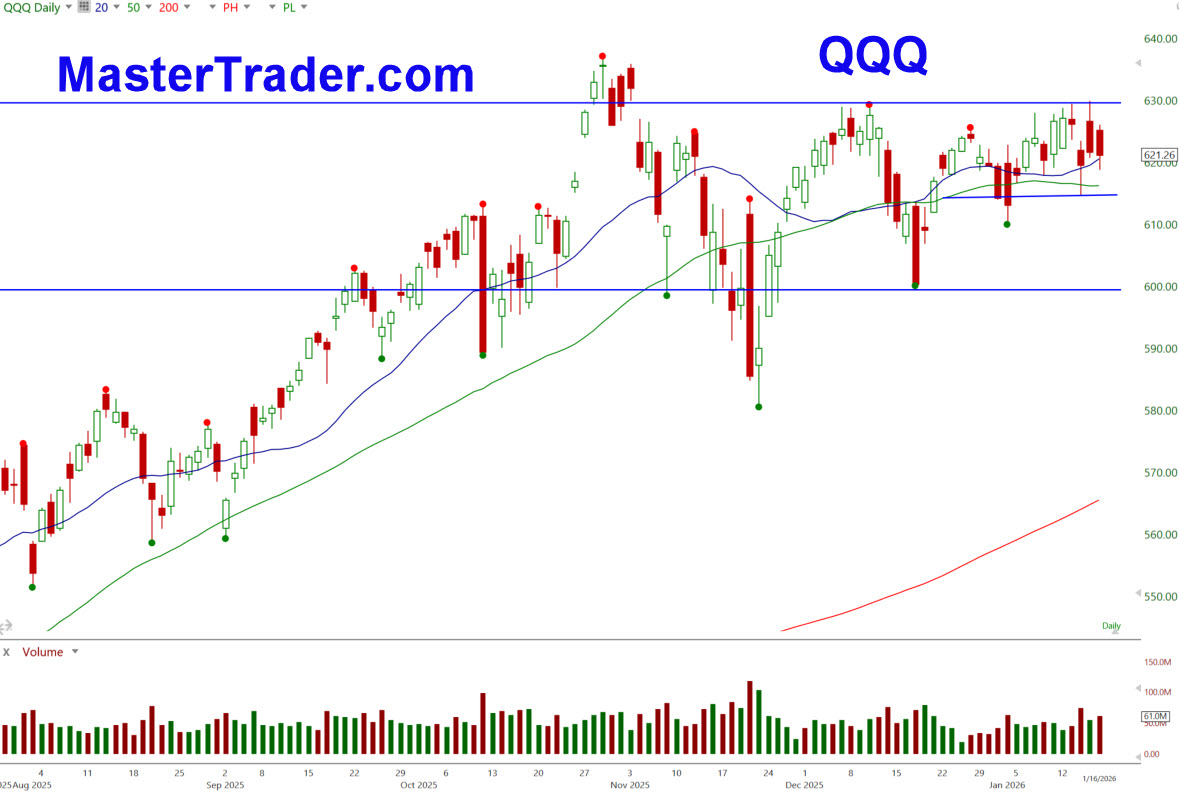
Nasdaq 100 ETF QQQ
Why Coiling Leads to Opportunity
Markets cannot stay compressed indefinitely. When volatility contracts, it stores potential energy—much like compressing a spring. Eventually, one side gains control, and price expands.
However, here’s the critical nuance most traders miss:
The first move out of a coil is often wrong.
False breaks are common, especially in news-driven and options-influenced markets. That’s why candlesticks alone are not enough. Context matters.
This is where Intra-day and Swing Candlestick analysis, combined with trend structure and support/resistance, becomes invaluable.
Rather than guessing direction, we:
- Observe where the break occurs
- Watch how price behaves after the break
- Evaluate whether demand or supply is actually in control
The goal isn’t prediction. It’s confirmation.
Coiling environments reward traders who wait for price to prove itself and punish those who chase the first move.
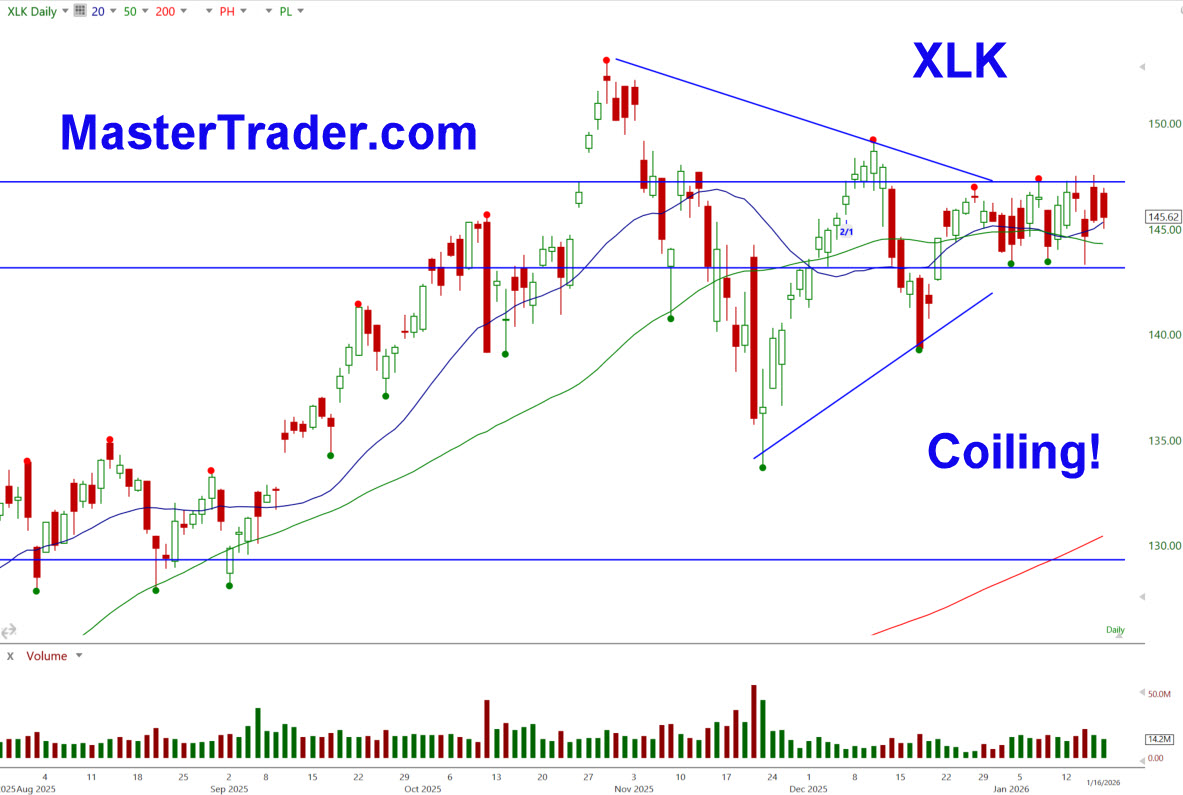
Sideways Is Not Boring—It’s Informative:
Sideways markets reveal who is trapped, who is patient, and where institutions are likely positioning before the move.
Markets don’t ring a bell before they move. They compress first.
Those who understand that—and manage risk accordingly—are prepared when expansion finally arrives.
If this article was helpful to you. Help other traders and share it!
All the best
Greg Capra