One of the most powerful tools in a trader’s toolbox is understanding sector rotation—the concept that institutional money doesn’t leave the market altogether but moves from one sector to another. It’s how Master Traders stay one step ahead.
When you know where the money is flowing to and from, you can shift your focus and find new high-probability trading opportunities.
Right now, the message from the market is loud and clear: money is flowing out of technology stocks, and it’s showing up across multiple time frames and instruments.
At Master Trader, we emphasize a Techno-Fundamental approach: technical analysis guided by intermarket and internal gauges. Sector rotation sits right at the crossroads of that methodology. It gives us a real-time read on where big money is going, and perhaps more importantly, where it’s leaving.
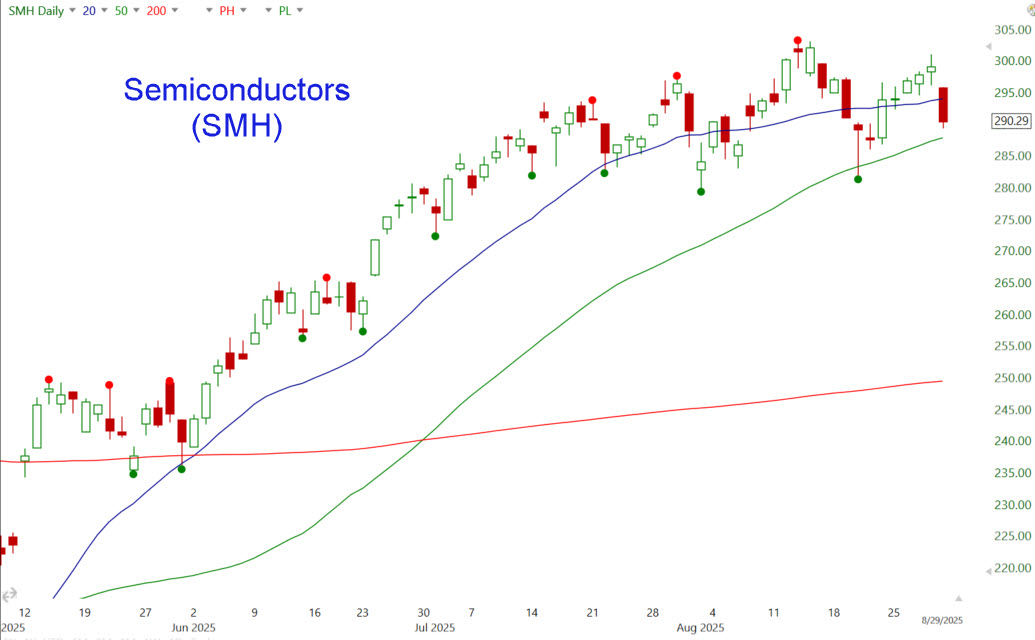
SMH: Semiconductor Weakness Signals Caution
Let’s start with Semiconductors, a key leadership group in the tech sector. The ETF SMH is flashing warning signs. This ETF, which includes chipmakers like Nvidia and Applied Materials, is under pressure—and that tells us something about market sentiment.
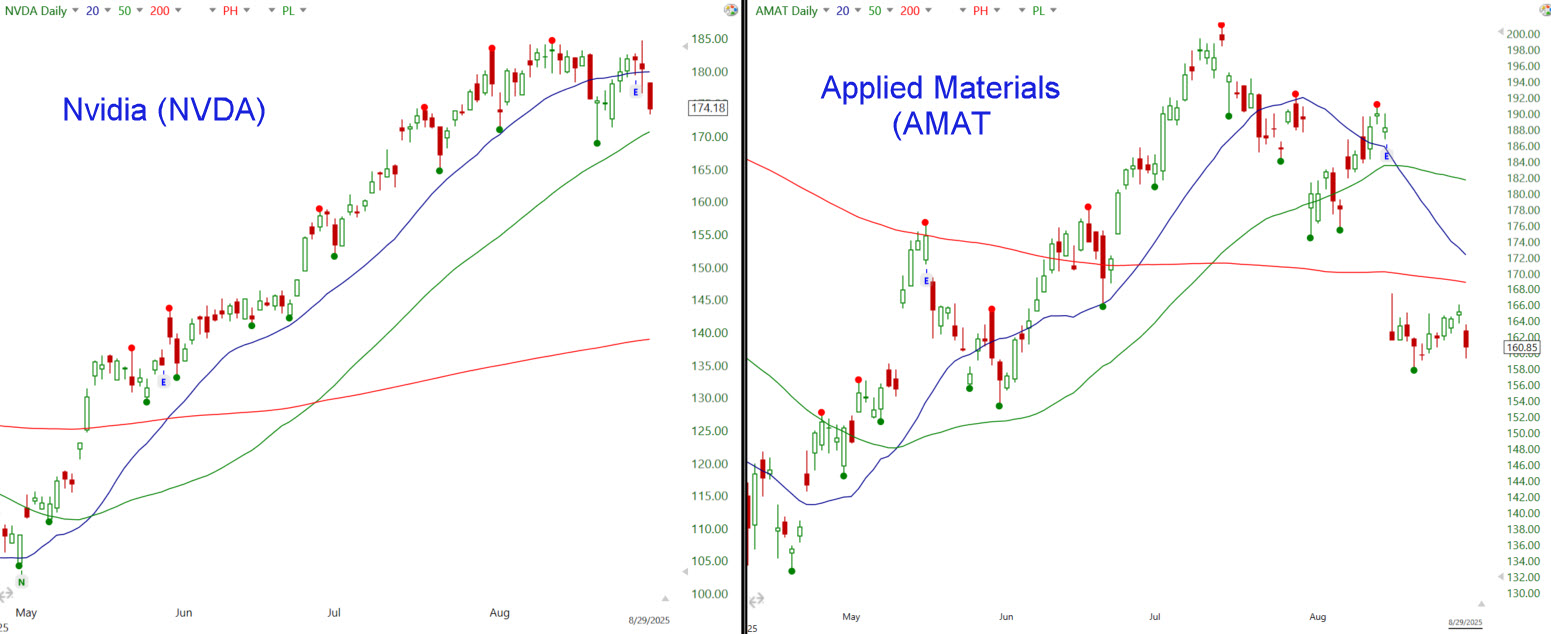
Nvidia (NVDA), the undisputed leader in AI hype and chip performance, showed significant weakness post-earnings. Instead of the usual earnings pop, the stock reversed sharply. That’s not bullish behavior from a market leader.
Worse still, Applied Materials (AMAT) didn’t just pull back—it broke down decisively, violating support and confirming a more severe distribution pattern. That’s institutional selling.
When leadership in a key growth sector starts to falter, it's not something we ignore.
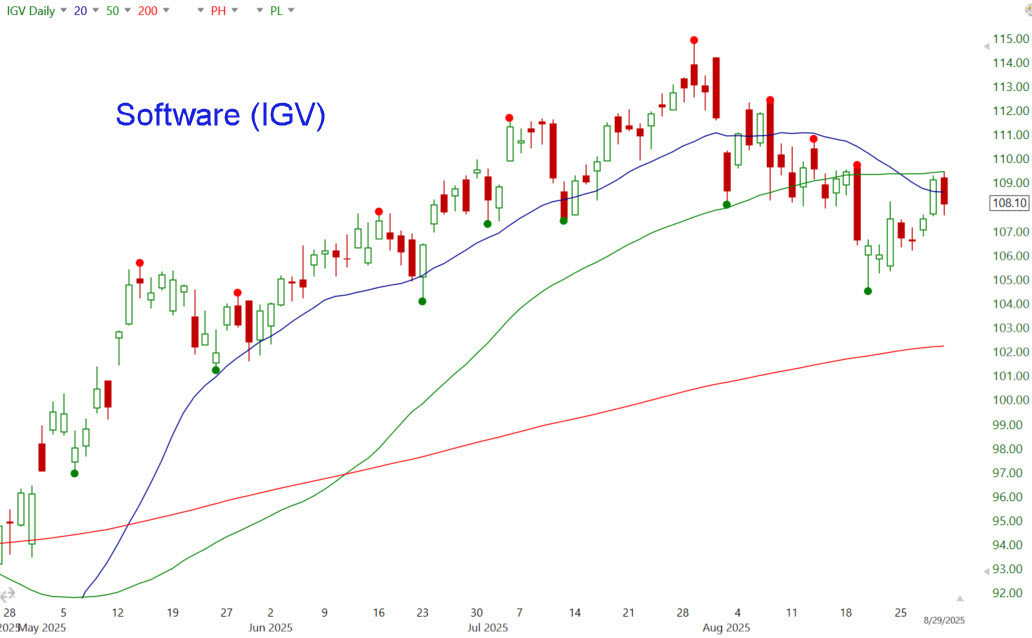
IGV: Software Rotation is Even More Aggressive
The rotation is even more dramatic in Software, tracked by the ETF IGV. After showing strength earlier this year, the sector has rolled over.
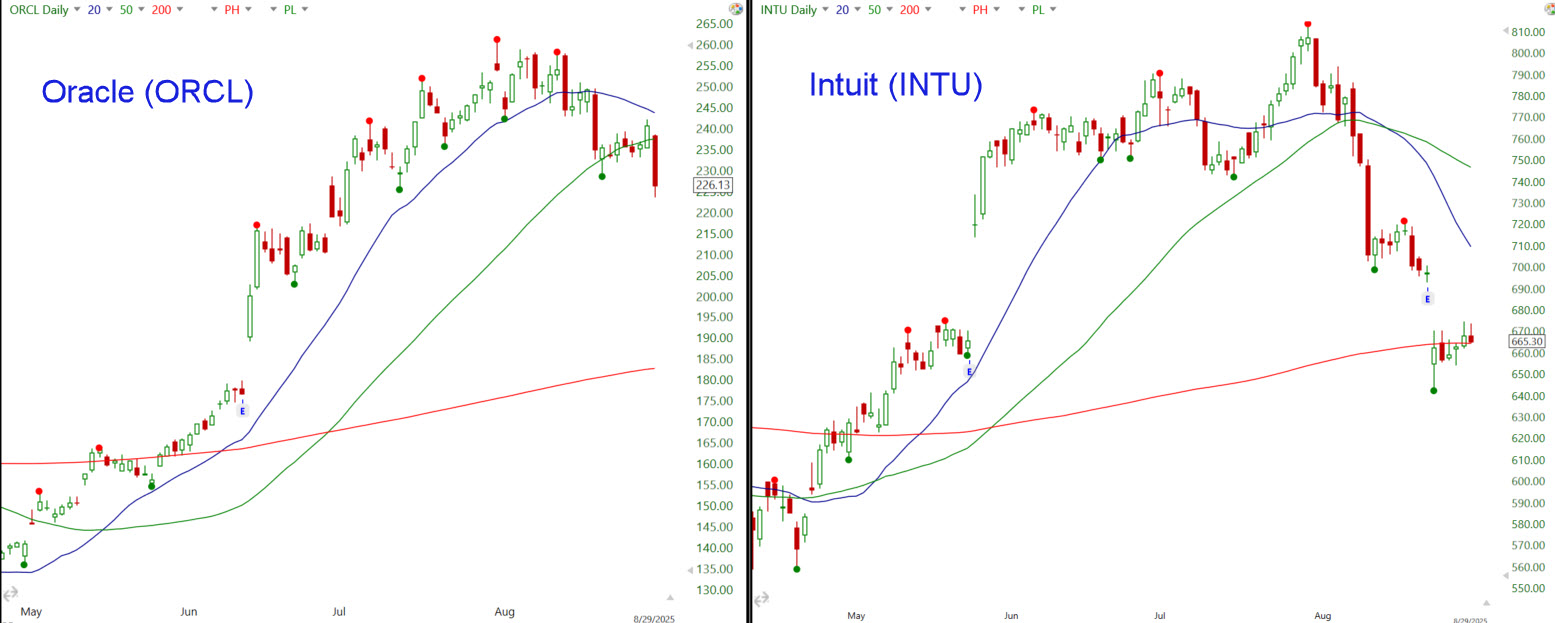
Oracle (ORCL) broke its uptrend and printed a Bearish Wide Range Bar on Friday, closing decisively below its 50-day moving average. That kind of technical failure—especially on increasing volume—suggests larger players are pulling out.
Intuit (INTU) has fared even worse. It's now down nearly 20% from its high, reflecting not just a sector pullback, but individual breakdown at the stock level.
This kind of coordinated sector weakness across multiple names—and confirmed by the ETF itself—shows us that the rotation is not random. It's strategic, and it’s real.
Sector rotation is the market's way of reallocating capital—money doesn't leave, it moves.
SMH, IGV, and leading names like NVDA, ORCL, and INTU are showing clear signs of distribution.
Breakdown patterns, wide range bearish bars, and violations of key moving averages are objective signals, not opinions.
Monitoring these flows keeps you on the right side of the trend—and gives you an edge when the next sector begins to lead.
Master Traders don’t guess or hope—they observe, interpret, and act based on price action and money flow. Sector rotation is one of the cleanest footprints left by institutional activity. If you’re not monitoring it, you’re trading in the dark.
If you want to learn exactly how we track money flow, interpret relative strength, and align our trades with institutional movement, check out our Master Trader Courses and Advisory Letters. We teach you how to become a self-reliant trader—not just follow alerts.
Why choose Master Trader for your Financial Future?